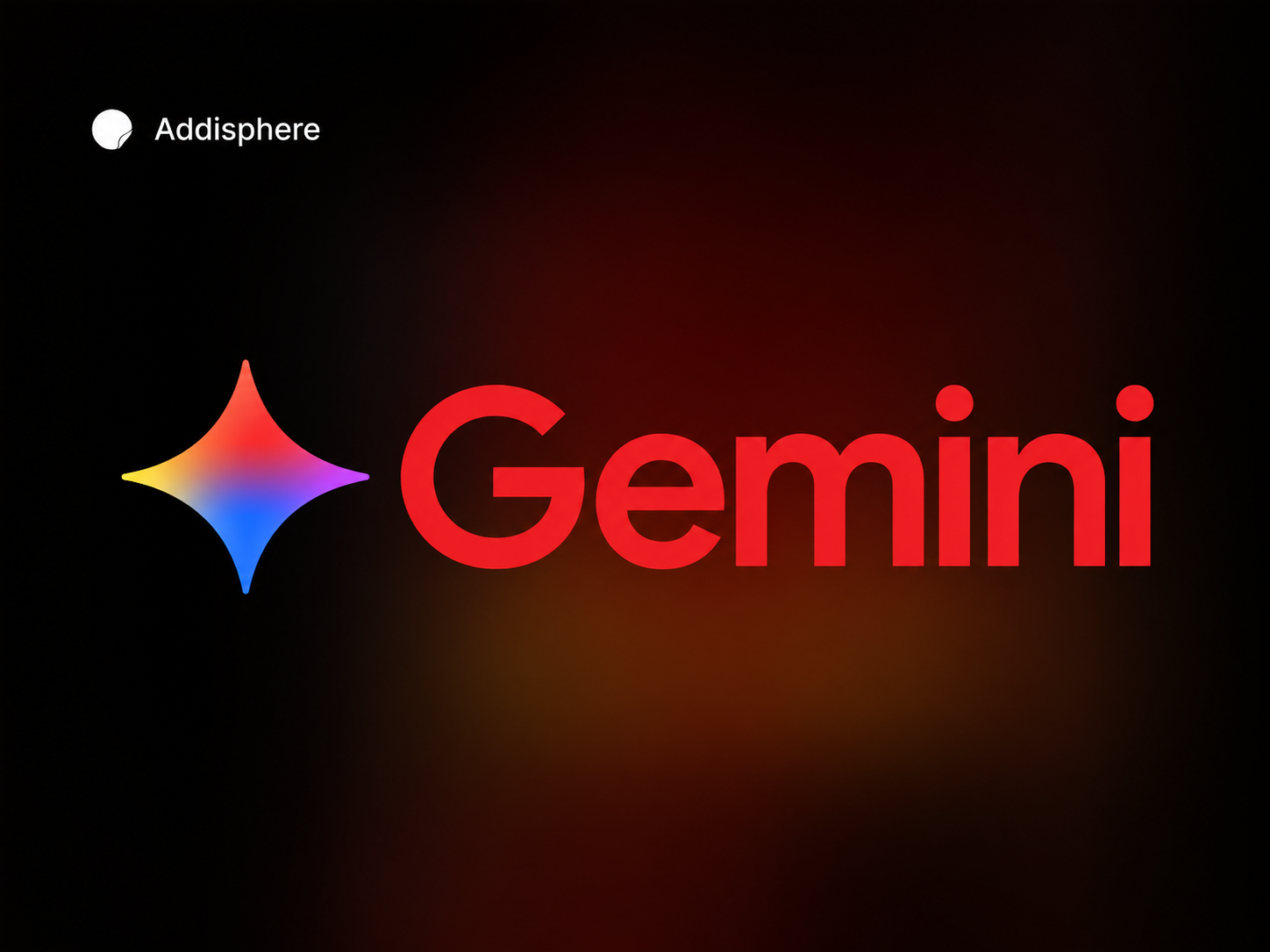
Where Is Gemini Pro?
The AI industry is moving at an unusually aggressive pace. OpenAI continues to release increasingly capable models. Anthropic has strengthened Claude’s position in coding and agentic workflows. Chinese labs such as DeepSeek, Qwen, and MiniMax are competing heavily on both performance and efficiency. Against that backdrop, one question has become increasingly noticeable: Where is Google’s next flagship Gemini Pro model? Google has continued to release and improve Gemini products, particularly its Flash family. Yet the next major Pro-class model has taken considerably longer than many observers expected. That does not necessarily mean Google has fallen behind. But it does suggest that building a frontier model is becoming significantly more difficult, even for one of the largest AI companies in the world.A Noticeable Gap in Google’s Flagship Lineup
Google has been far from inactive. Gemini continues to expand across Search, Android, Workspace, Cloud, and developer products. The company has also maintained a rapid cadence of smaller and more efficient models. The unusual part is the gap at the top of the lineup. A Pro model carries a different expectation from a Flash model. It is expected to compete directly with the strongest models available from OpenAI, Anthropic, and other frontier labs. That means simply releasing an incremental improvement may no longer be enough. A new Gemini Pro needs to demonstrate meaningful gains in areas such as:- complex reasoning
- software engineering
- agentic tool use
- multimodal understanding
- long-context reliability
- inference efficiency
Coding Has Become a Critical Benchmark
One of the most important changes in the AI market is the growing importance of coding performance. Programming benchmarks are no longer only relevant to developers. Modern coding agents test many of the capabilities required for broader autonomous systems. A strong coding model must be able to understand unfamiliar codebases, reason across multiple files, use external tools, interpret failures, generate tests, and complete tasks across several steps. In other words, coding provides a useful test of whether a model can move beyond answering questions and begin performing structured work. Anthropic has invested heavily in this area, particularly through Claude and Claude Code. OpenAI has also placed considerable emphasis on software engineering and agentic workflows. This raises the competitive threshold for Google. A Gemini Pro model that performs well in general reasoning but noticeably trails competitors in coding would be difficult to position as a true flagship.Google Has a More Complicated Deployment Problem
There is also an important structural difference between Google and many of its competitors. Anthropic primarily needs Claude to succeed as an AI platform. Google needs Gemini to operate across an enormous existing ecosystem. Gemini is being integrated into products including:- Google Search
- Android
- Gmail
- Google Docs
- Chrome
- YouTube
- Google Cloud
- Workspace
Flash Is Moving Faster Than Pro
One of the strongest indications that Google is not standing still is the speed at which it has continued improving the Gemini Flash family. Flash models serve a different purpose. They are typically optimized around characteristics such as:- lower latency
- lower inference cost
- high request volume
- real-time applications
- scalable product integration
Competition Is Coming From Multiple Directions
Google is not competing against a single company. The market has effectively split into several overlapping races. OpenAI and Anthropic are competing heavily around frontier intelligence, reasoning, coding, and agents. Chinese AI companies are placing significant pressure on another dimension: efficiency. Models from companies such as DeepSeek and Alibaba's Qwen have increased expectations around how much capability developers should receive for a given inference cost. That creates a difficult competitive environment. Google cannot focus exclusively on benchmark performance. It must simultaneously compete on: capability, cost, latency, reliability, ecosystem integration, and infrastructure efficiency. A model that wins on intelligence but is prohibitively expensive to serve at Google's scale is not necessarily a successful Google model. The reverse is also true. A highly efficient model that trails the frontier too significantly may struggle to attract developers.Frontier AI Development Is Becoming Less Predictable
Another factor is that frontier model development does not behave like conventional software development. There is no guarantee that increasing compute, training data, or model size produces a proportional improvement. A large training run can reveal unexpected weaknesses. A model might improve in mathematics while becoming less reliable in coding. A new post-training method might improve reasoning while increasing latency. Changes that strengthen agentic behavior may introduce new safety or reliability problems. When model development costs reach extraordinary levels, an unsuccessful training run can become one of the most expensive experiments in the technology industry.The Bigger Question May Be Gemini 4
The delay also creates an interesting strategic problem for Google. If work on the next major Gemini generation is already progressing, the value of releasing an intermediate flagship begins to decline. Consider the product sequence: Gemini 3.1 Pro → Gemini 3.5 Pro → Gemini 4 If Gemini 4 is close enough, Google must decide whether launching 3.5 Pro provides sufficient value. At some point, resources may be better spent improving the next major generation rather than polishing an intermediate model that could quickly become outdated. That does not mean Gemini 3.5 Pro will necessarily disappear. It could still become a public model, an API offering, an internal foundation for other products, or part of the technical work that eventually contributes to Gemini 4. But strategically, Gemini 4 may now be considerably more important.Google Still Has a Significant Advantage
Despite the pressure around flagship models, Google possesses an advantage very few AI companies can replicate. Distribution. Google controls some of the largest software platforms in the world. Search, Android, Chrome, Gmail, YouTube, Workspace, and Google Cloud collectively provide an extraordinary distribution network for Gemini. This means Google does not necessarily need to dominate every benchmark. A model that is highly capable, efficient, and deeply integrated into the products people already use could become enormously influential even without consistently occupying the top position on public leaderboards. However, distribution is not a substitute for model quality. It amplifies strong products. It cannot indefinitely compensate for a substantial capability gap. Google therefore needs both. It needs the ecosystem advantage of its existing products and a frontier model capable of competing with the strongest alternatives.So, Is Google Falling Behind?
The answer is more nuanced than a simple yes or no. Google is clearly facing stronger competition than it did several years ago. Anthropic has become a major force in coding and enterprise AI. OpenAI continues to push frontier reasoning and agents. Chinese AI labs are accelerating improvements in both capability and efficiency. At the same time, Google remains one of the few organizations with the research talent, infrastructure, capital, proprietary hardware, product ecosystem, and distribution necessary to compete at every layer of the AI stack. The delayed appearance of the next Gemini Pro model therefore looks less like evidence that Google has stopped progressing and more like evidence of how difficult the frontier has become. The competitive bar is rising faster than model development cycles. A model that looked impressive when training began may no longer look impressive by the time it is ready to ship.Gemini 4 May Be the Real Test
Ultimately, the most important model may not be the delayed Gemini Pro release at all. It may be Gemini 4. If Google's next major generation delivers substantial improvements in reasoning, coding, agents, multimodality, and efficiency, the current delay will likely become a relatively minor chapter in Gemini's development. If it does not, the discussion becomes much more significant. The question would no longer be: Where is Gemini Pro? It would become: Can Google consistently keep pace at the frontier of AI development? For now, that question remains open. And that is exactly why the next major Gemini release will be one of the most closely watched AI launches in the industry.
Tagged with :