Digital discovery is changing. For years, businesses focused on SEO to improve rankings in search engines and drive website traffic. Today, AI systems are becoming part of how people research products, compare services, and make decisions.
This shift introduces Generative Engine Optimization (GEO) — a strategy focused on making businesses more visible and understandable to AI-driven experiences.
GEO is not a replacement for SEO. It is an extension of it.
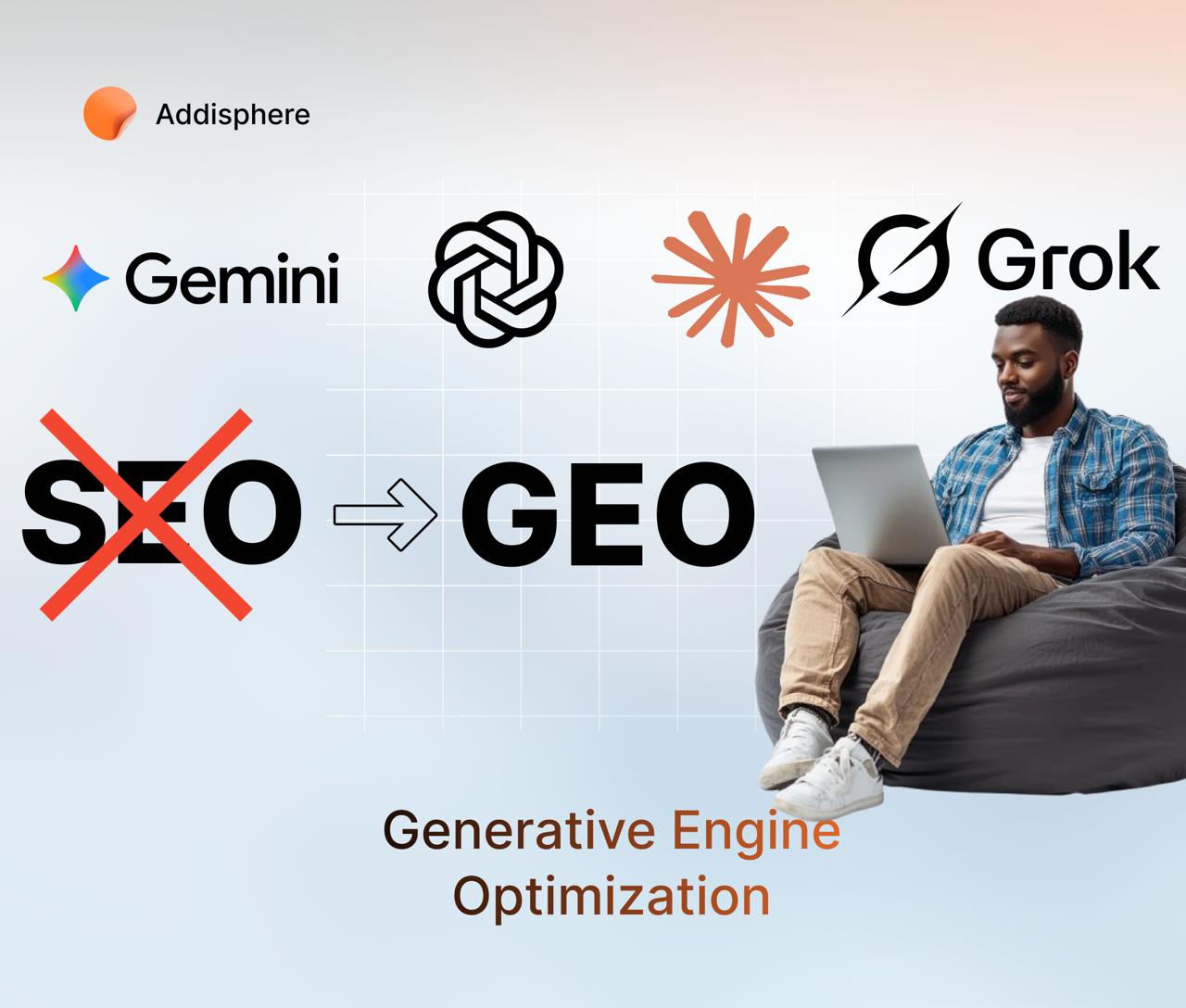
What is GEO?
Generative Engine Optimization (GEO) is the process of organizing and optimizing business information so AI systems can better understand, reference, and recommend your company.
Instead of optimizing only for:
“How do we rank higher?”
Businesses are starting to optimize for:
“How do we become part of AI-generated answers?”
Examples include:
-
AI recommending software providers
-
AI comparing products
-
AI suggesting service companies
-
AI generating industry summaries
-
AI helping users make purchasing decisions
Companies that prepare early may gain visibility where future customer searches happen.
Why GEO Matters for Businesses
1. Increased Visibility
Users increasingly interact with AI assistants before visiting websites.
If your business is optimized for GEO:
-
Products become easier to discover
-
Services are easier to understand
-
Brand information appears more consistently
-
Educational content gains wider reach
This creates visibility beyond traditional search results.
2. Stronger Market Position
AI systems prefer information that is:
-
Structured
-
Consistent
-
Clear
-
Reliable
Businesses that provide organized content build stronger authority signals.
This supports:
-
Better trust
-
Improved reputation
-
Industry recognition
-
Higher conversion quality
3. Lower Dependence on Paid Acquisition
Many companies rely heavily on ads for traffic growth.
GEO helps create long-term digital assets through:
-
Documentation
-
Knowledge content
-
Case studies
-
Educational resources
Over time, these assets continue supporting visibility without constant advertising costs.
Business Benefits of GEO
|
Business Area |
Benefit |
|---|---|
|
Visibility |
Better presence in AI responses |
|
Marketing |
Reduced reliance on paid channels |
|
Leads |
Higher-intent visitors |
|
Authority |
Improved credibility |
|
Growth |
Long-term discoverability |
|
Competition |
Early advantage in AI search |
GEO vs SEO
|
SEO |
GEO |
|---|---|
|
Focuses on rankings |
Focuses on AI understanding |
|
Keyword-based |
Entity and context based |
|
Optimizes pages |
Optimizes knowledge |
|
Measures clicks |
Measures discoverability |
|
Search visibility |
AI visibility |
The strongest digital strategies will likely combine both.
SEO helped businesses become visible in search engines.
GEO helps businesses become visible in AI-driven discovery.
As customer behavior evolves, organizations that prepare structured, trustworthy, and meaningful information may be better positioned for the next phase of digital search.
Tagged with :